SIGN UP

TAG Heuer’s Unexpected Leap Into Lunar Phases and Carbon Nanotech

While many brands treated Geneva Watch Days 2025 as a platform for new case materials or dial tweaks, TAG Heuer used its debut at the young fair to unveil two genuine technical breakthroughs, raising the event’s stakes considerably.
Spearheaded by Movement Director Carole Forestier-Kasapi—a complications specialist and GPHG laureate known for her work at Audemars Piguet and Cartier—these innovations were showcased across three historic icons: the 44mm Carrera Chronograph Tourbillon, the 39mm Monaco, and the pre-Glassbox-style 39mm Carrera.
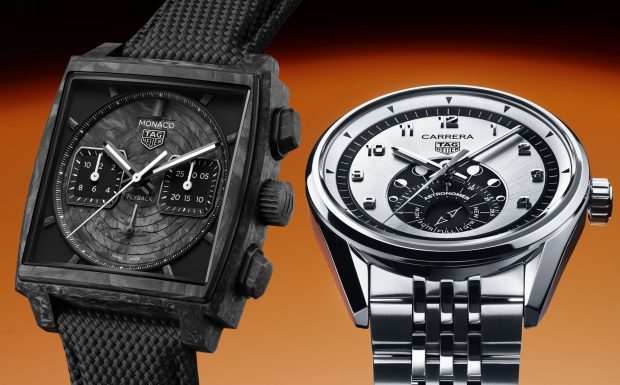
TAG Heuer Carrera Astronomer
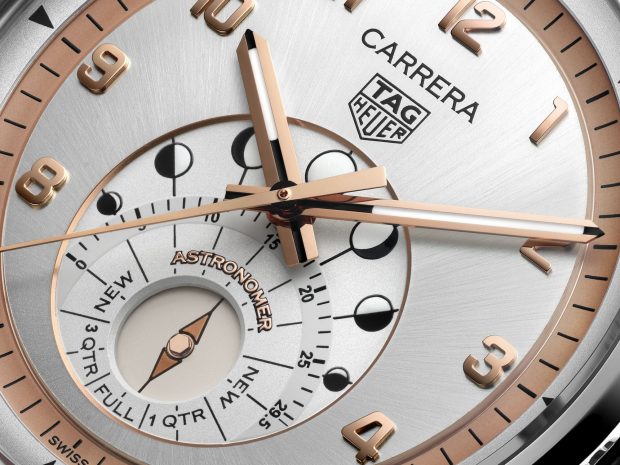
Outside of yesteryear Heuer (before the TAG Heuer merger) complications like the quirky 1970s Solunar, which tracked the moon’s pull on tides, TAG Heuer has not dabbled in the moonphase complication, until now. Moonphase illustrations on the TAG Heuer Carrera Astronomer’s subdial invite you to track the 29.5-day cycle of the moon.
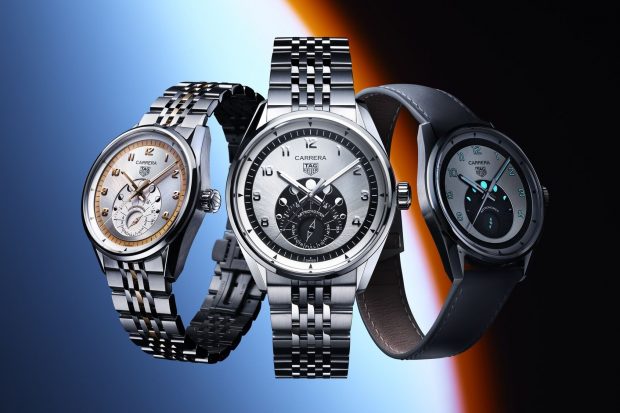
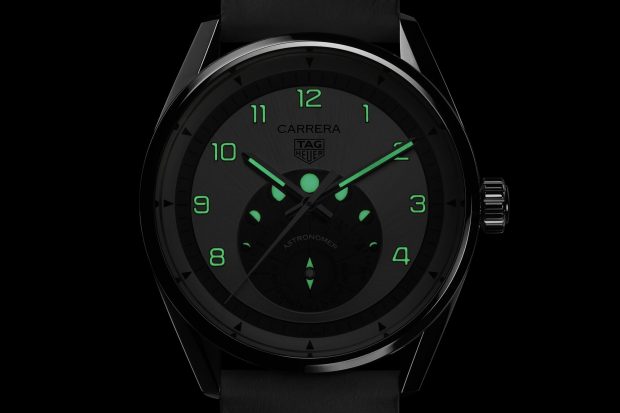
This novelty will be available later this year in three variants: a 500-piece limited edition with rose gold accents (CHF 6,900), a 500-piece limited edition with turquoise Super-LumiNova (CHF 4,350), and a non-limited steel-and-black edition (CHF 4,550).
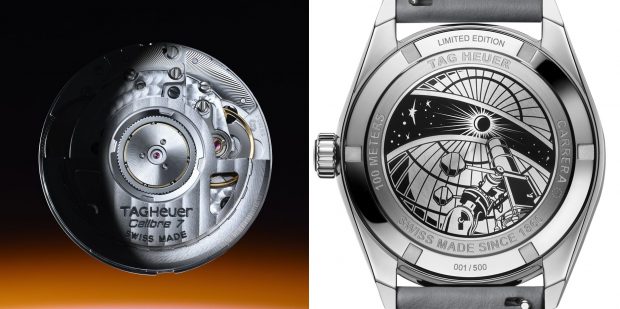
The turquoise model comes on a leather strap, while the other two are paired with 7-link steel bracelets faintly reminiscent of beads-of-rice designs. We would have liked a glimpse at the self-winding Calibre 7, which packs a 50-hour power reserve, but alas its caseback is closed, engraved with a laser etching of an astronomical observatory.
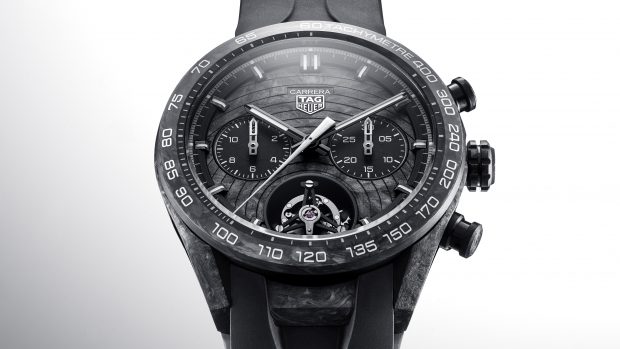
TAG Heuer Monaco Flyback Chronograph TH-Carbonspring and Carrera Chronograph Tourbillon Extreme Sport TH-Carbonspring
Since Christiaan Huygens fashioned the first steel hairspring in 1675, watchmakers have pursued isochronism with alloys, silicon, and even carbon composites. The latter, praised for uniform energy release, has long remained experimental.
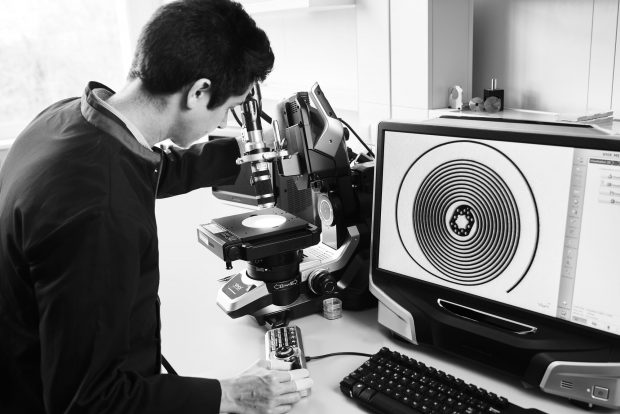
Uniform energy what? Put simply: imagine pulling on a rubber hose. At the start it resists with great inertia, halfway through it resists with less force—it doesn’t uncoil evenly. A hairspring behaves the same. Unless it releases energy consistently, timekeeping drifts, which is why uniform energy release is so critical to accuracy.
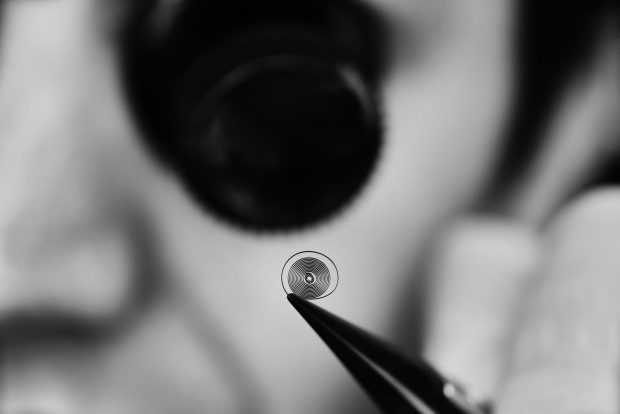
Now, after a decade of research, TAG Heuer claims its proprietary TH-Carbonspring meets chronometric standards, so much so that both new models are COSC-certified. This innovative component is a refreshing alternative to highly efficient silicon composite hairsprings, which have largely been patented by companies like Rolex, Swatch Group and Ulysse Nardin.
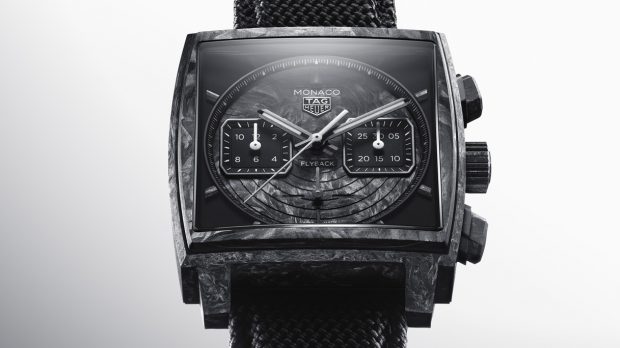
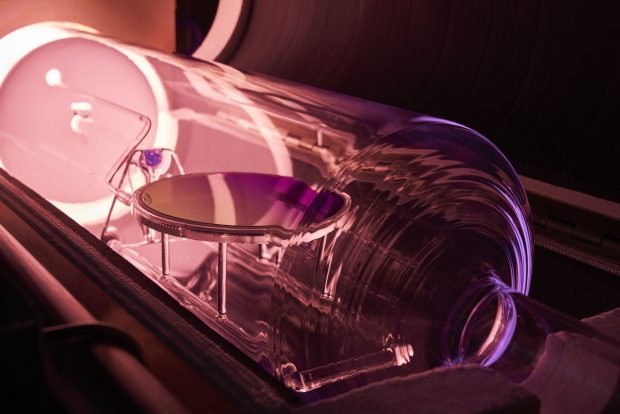
The carbon composite spring is forged via chemical vapour deposition, then enhanced via several further treatments including amorphous carbon infusion and heat stabilization. First test-driven in the pièce unique Carbon Monaco for Only Watch 2021, it now enters serial production with four patents filed.
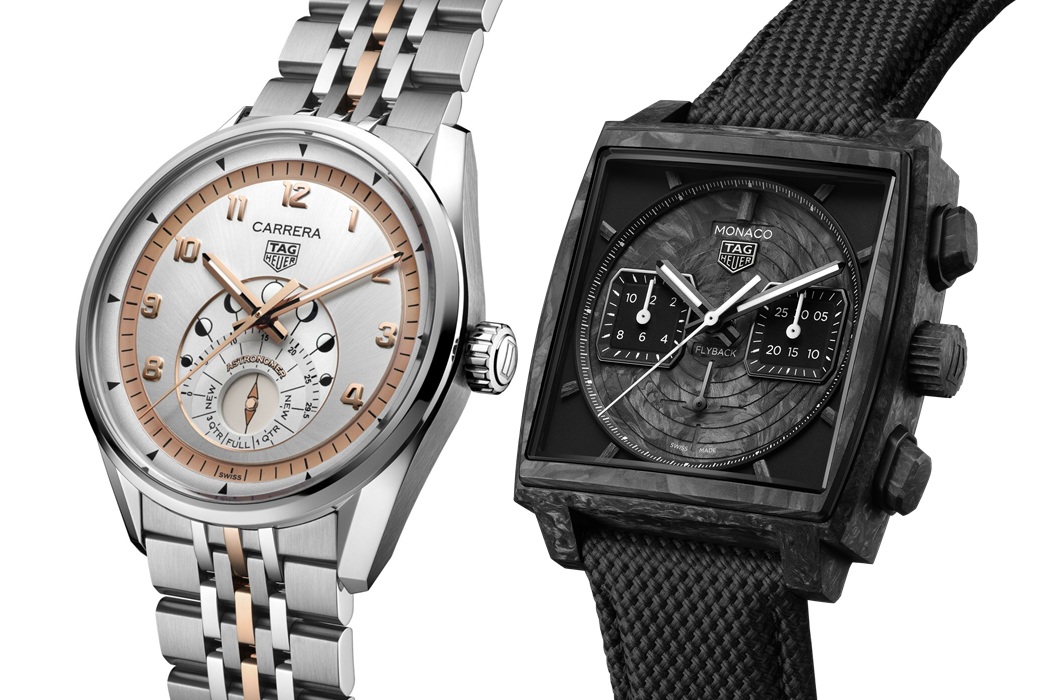
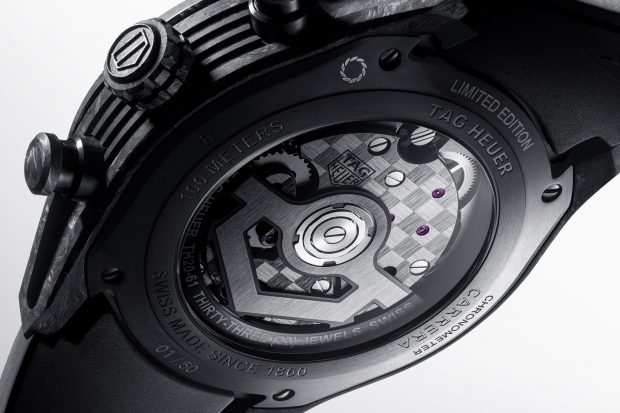
The two new releases that feature the TH-Carbonspring are the Monaco Flyback Chronograph TH-Carbonspring (CHF 17,000) that runs on the automatic Calibre TH20-60 with an 80-hour reserve, fitted to a black rubber strap with textile embossing and black stitching; and the Carrera Chronograph Tourbillon Extreme Sport TH-Carbonspring (CHF 40,000) that employs the Calibre TH20-61 with 65 hours of reserve, paired with a robust black rubber strap.
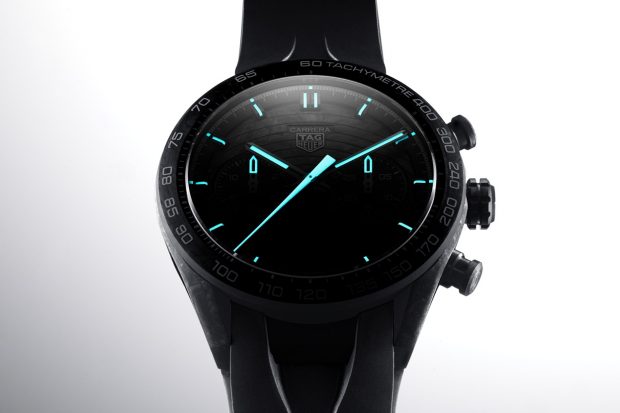
They’re both encased in carbon-fiber, and I love that their iconic dials and casebacks also sport intricate carbon-fiber details.
 With its focus on 39mm cases—a sweet spot that remains in vogue—and two significant technical advances, TAG Heuer lent Geneva Watch Days a gravitas that underscores the festival’s rising importance.
Advertisement

Related Posts





Advertisement