SIGN UP

Inside Oan.Gio, The Vietnamese Watch Studio Championing Traditional Decorative Techniques from Around the World

Today’s microbrand landscape is crowded with automation masquerading as artisans—dials lasered or printed by cookie-cutter ODM “creativity”. Amid the noise, Nghia Nguyen Dai stands out simply by refusing the shortcut. He’s seeking out traditional artisans from around the world to build visually captivating mechanical watches, the old-school way.
For a brief moment, however, he thought he’d trade the world of guilloché and fine movement tolerances for a quiet life in the Vietnamese countryside, he reveals to me, raising exotic fish.

After six years at a rising French luxury brand, overseeing production, innovation, technical drawings, the entire web of supply-chain pressure points, Nghia left the job, with no clear plan. This quiet, frightening space between chapters gave him ample time to reflect on what he truly enjoyed in horology.
“I realized that what I enjoyed most wasn’t the product,” he says. “It was the relationships I had built with the artisans, suppliers, partners and customers.”
What Nghia remembers are conversations, not components, so when he finally decided what to do next, he returned to the one thing that had always grounded him: human craft.
That’s how Oan.Gio was born in 2024—out of passion, connection, and a promise his wife reminded him he’d long owed himself: to create something truly his own.
The name itself straddles two worlds. “Oan” is a phonetic echo of “one”, and the name of his wife, Oanh. “Gio” means “time” or “hour” in Vietnamese. Together, they form a wordmark that is simultaneously Asian and European, a neat encapsulation of the French-born Vietnamese founder who never feels entirely claimed by one culture or the other.
People see different things in the logo. Some read the initials, while others spot an infinity loop, the lucky number 8, or the Ouroboros. Nghia likes that this name and logo are open to interpretation.
His own identity has been equally fluid. Born in Vietnam, he was raised in France from the age of two. He moved back to Vietnam in 2019, slowly re-immersing himself in the culture his parents passed down in fragments during his childhood.
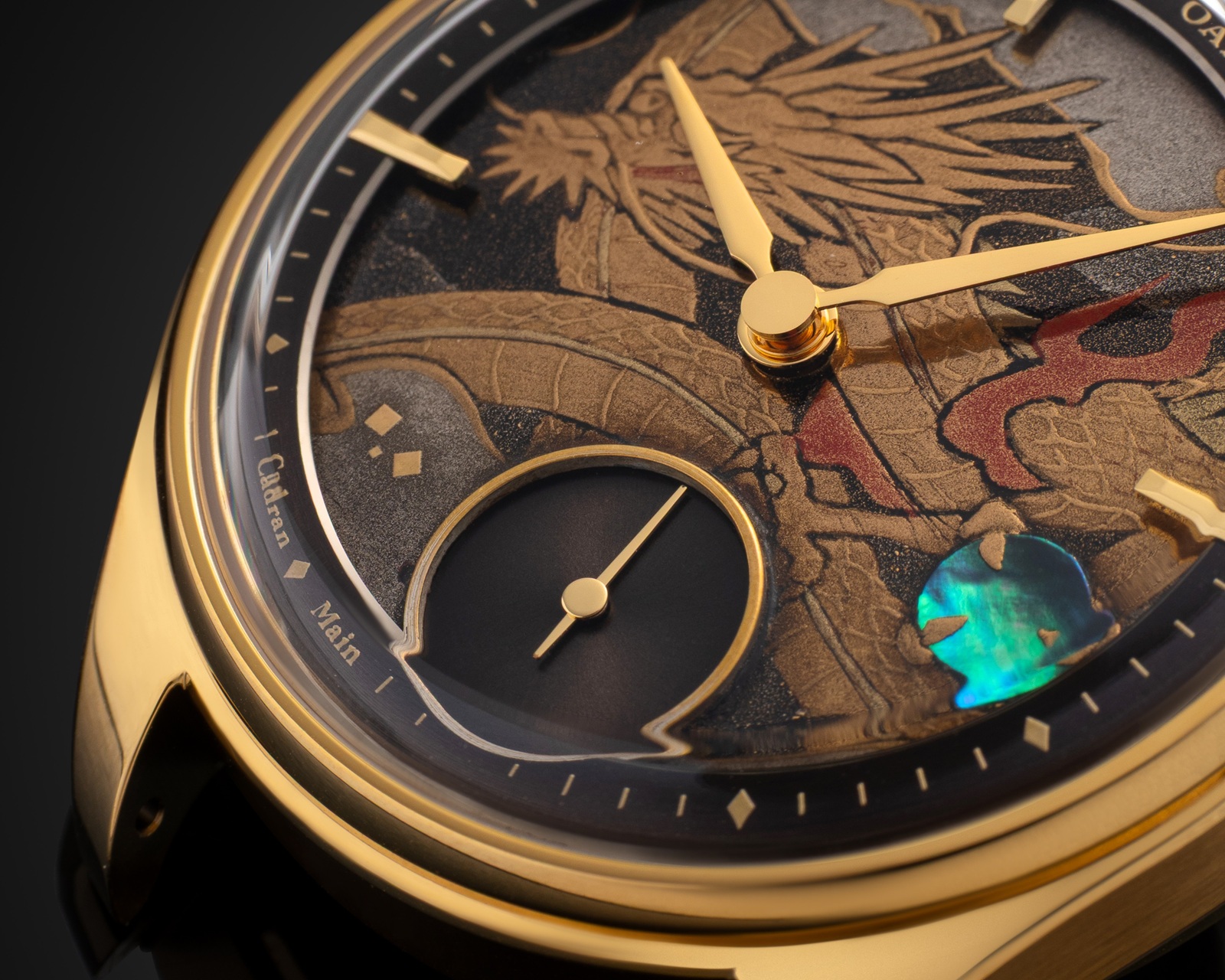
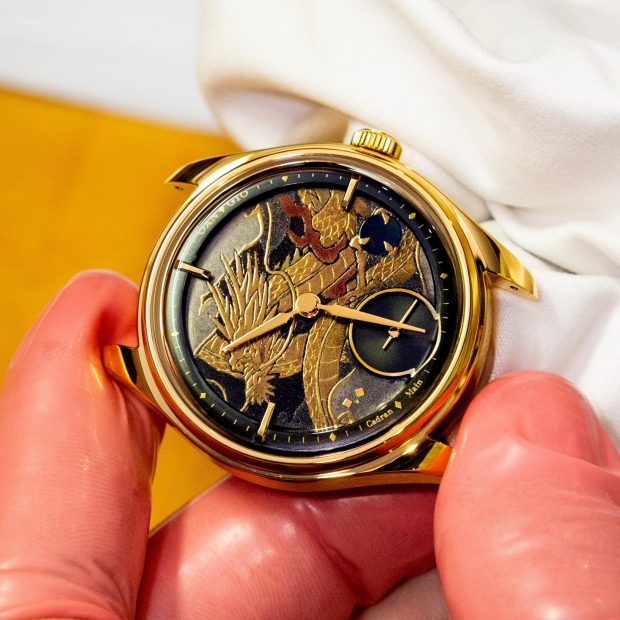
And it is in Vietnam that Nghia rediscovered the craft that would define his mission: traditional sơn mài lacquer.
Most people outside Vietnam know lacquer only through glossy furniture or decorative screens. Very few realize it’s a deep, multi-layered, almost meditative craft, involving weeks of applying, sanding, curing, polishing—again and again—until colors acquire an otherworldly depth. Nghia saw in it an echo of watchmaking: slow, meticulous, quietly obsessive.

He did something unheard of in modern watchmaking: he brought sơn mài into the dial. Then he brought Damascene. Then, little by little, he gathered a constellation of artisans—from Vietnam, China, France, Georgia, Japan, Russia, Spain, Ukraine, and this list continues to grow.
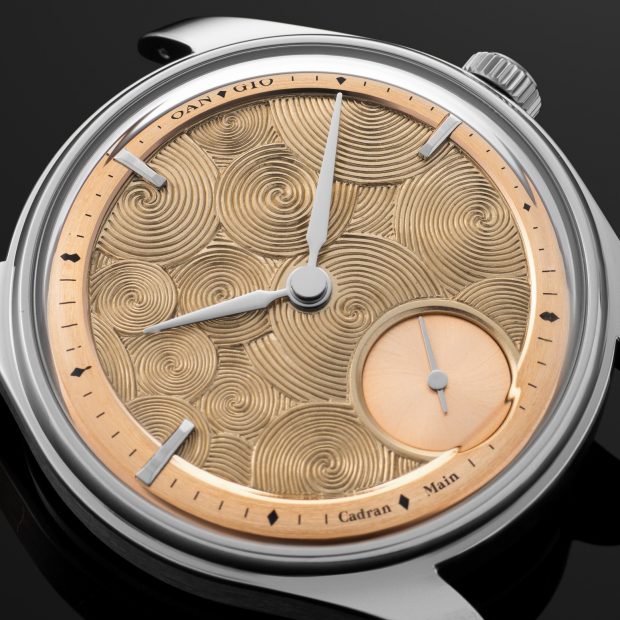
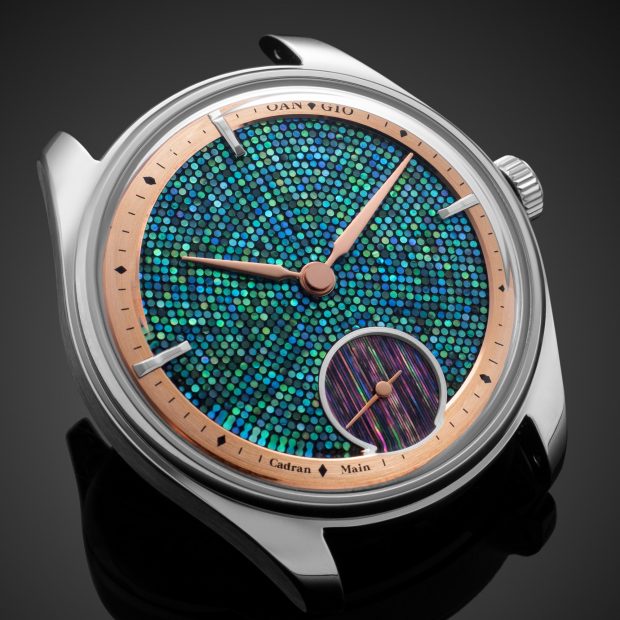
Their crafts form the soul of Oan.Gio: lacquer, guilloché, enameling, raden, maki-e, Damascene steelwork. Nghia has an obvious penchant for hand engraving, in particular, which has produced a diverse array of engrossing Oan.Gio timepieces.
“Each watch is a blank canvas,” he says. “I allow artisans to express their craft freely.”

Nghia speaks with a quiet pride about the lacquer workshop he recently invested in—owned and run entirely by independent Vietnamese artisans.
“Supporting Vietnamese artisans and sharing their artistry with the world is something that gives me tremendous purpose,” he says.
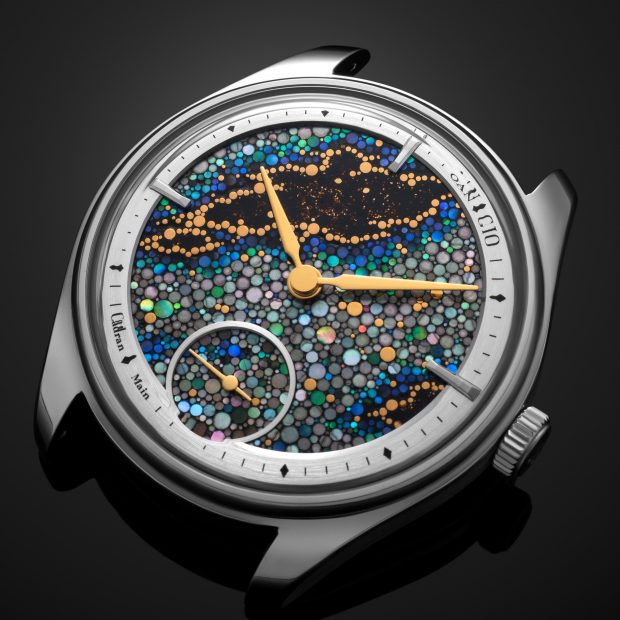
But even purpose comes with limits. Nghia’s production numbers are tiny, and he doesn’t work with retailers, distributors, or marketing agencies. “I simply can’t afford it,” he admits, “and honestly, I prefer being a confidential brand with genuinely happy customers.”
His timelines are long, and his margins are slim, but he doesn’t mind. Nghia just wants métiers d’art to be accessible enough that ordinary collectors—people who care about craft more than hype—can own something fashioned by human hands and infused with history.
“The slow pace keeps me grounded,” he says. “It lets me focus on what truly matters: craftsmanship, authenticity, human connection.”
Maybe that’s why Oan.Gio, for all its small scale, feels expansive. It isn’t a brand so much as a bridge: spanning continents, centuries, and ancient cultures from around the globe. The watch is the smallest part of the story, the human imprint is the rest.
Advertisement

Related Posts





Advertisement